
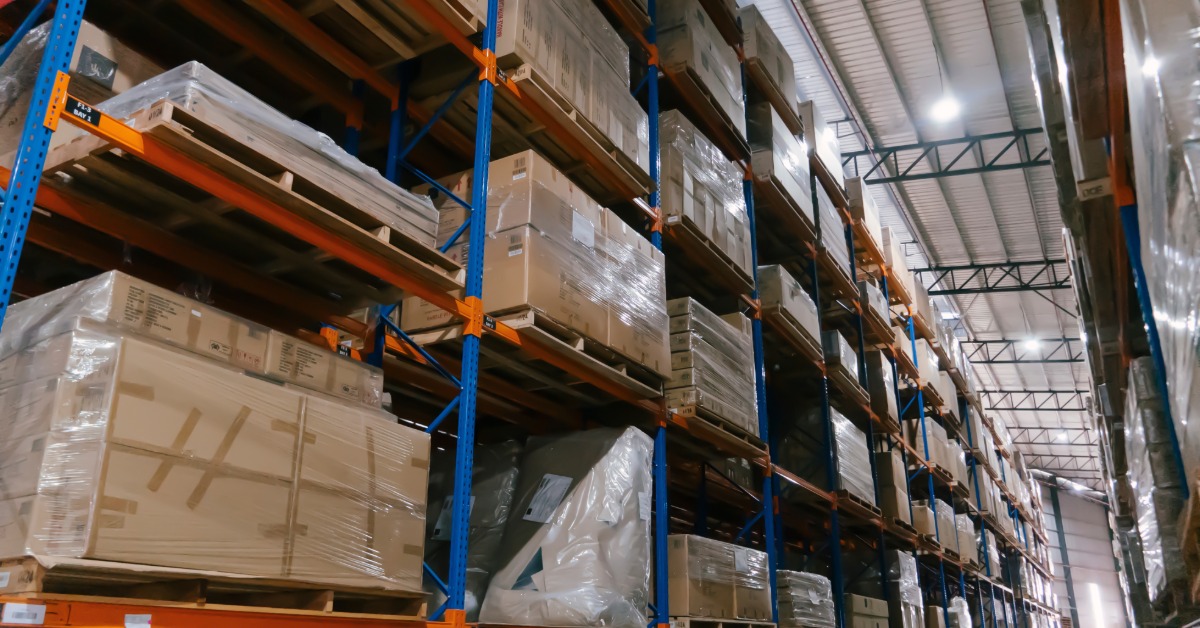
Storage conditions place different demands on pallets than active shipping or frequent handling environments, particularly when loads remain stationary for extended periods. Even minor structural weaknesses can affect stability, especially when pallets must support consistent weight without regular repositioning or adjustment.
Understanding what makes a pallet suitable for long-term storage requires evaluating how structural design, material condition, and environmental exposure influence performance. When these factors align, pallets maintain load integrity and support more reliable storage outcomes across varying warehouse conditions.
Load Retention Over Extended Periods
Pallets used for long-term storage must maintain their shape and strength under continuous load. Unevenly distributed loads place ongoing stress on boards and fasteners, revealing weaknesses.
Selecting pallets designed for sustained load retention reduces the risk of gradual deformation, which can compromise both product stability and storage efficiency. Businesses working with national pallet solutions often prioritize designs that support this type of consistent performance.
Resistance to Environmental Conditions
Storage environments vary widely, from climate-controlled warehouses to facilities exposed to humidity or temperature fluctuations. These conditions can affect wood integrity, leading to gradual weakening of pallet components.
Pallets suitable for long-term storage must withstand these environmental factors without significant structural change. Material selection and proper treatment can maintain consistent performance under varying conditions.
Structural Stability for Stacking
Stacking introduces additional pressure on lower pallets, which must support both their own load and the weight of pallets above them. In long-term storage scenarios, this pressure remains constant, increasing the importance of structural reliability.
Pallets designed for stacking maintain alignment and resist compression, which supports stable storage configurations. Using national pallet solutions that account for stacking requirements can prevent load shifting and structural failure.
Material Quality and Construction Consistency
Variations in wood quality or construction methods can create inconsistencies that affect long-term performance. Lower-grade materials may degrade more quickly under sustained weight or environmental exposure, which reduces reliability.
Consistent construction standards improve predictability, allowing pallets to perform uniformly across storage conditions. This consistency becomes increasingly important when managing inventory across multiple locations or extended timeframes.
Storage Configuration and Placement
Warehouse teams affect pallet stability by deciding where and how to position pallets within a storage environment. Uneven surfaces, improper spacing, or misaligned stacking can introduce stress points that weaken pallet structures.
Proper placement and configuration reduce unnecessary strain, allowing pallets to support loads more effectively. Businesses often align storage practices with pallet design to maintain long-term performance.
Support Long-Term Storage With the Right Pallet Strategy
Pallets designed for long-term storage must balance structural strength, material durability, and environmental resistance to maintain consistent load support. When these factors align, businesses can reduce the risk of product damage and maintain stable storage conditions over extended periods.
When organizations know what makes a pallet suitable for long-term storage, they can refine both sourcing and storage strategies. Reach out to First Alliance Logistics Management to implement national pallet solutions that support reliable performance across long-term storage environments.