

Wooden pallets support product movement throughout the supply chain, but replacing every pallet with new inventory creates a continuous demand for fresh lumber. Many pallets and individual components still have useful service life remaining after their first trip, creating an opportunity to keep existing wood in circulation before additional raw material becomes necessary.
The relationship between recycled pallets and reduced dependence on raw lumber starts with extending the productive life of material that has already entered the pallet supply chain. Recovery and repair allow businesses to meet a portion of their ongoing pallet needs with existing wood, creating a sourcing model that uses available resources more efficiently.
Reuse Extends the Value of Existing Lumber
A wooden pallet does not automatically reach the end of its useful life after completing a shipment. Pallets that remain structurally sound can continue serving suitable applications, allowing the lumber within them to support additional movement without requiring a newly manufactured replacement.
Repeated use changes the amount of value businesses receive from the original material. When a pallet completes additional cycles, the lumber used to manufacture it supports more activity before the supply chain needs replacement material. Businesses sourcing recycled pallets for sale can return suitable inventory to their operations while extending the useful life of wood already in circulation.
Extending pallet use also changes the relationship between demand for pallets and demand for raw lumber. Businesses still need dependable pallet inventory, but that inventory does not have to come exclusively from new production when recovered pallets can satisfy the application.
Recovery Captures Pallets Before Their Material Value Is Lost
Effective recycling begins with recovering pallets after use and evaluating what remains serviceable. Some pallets can return to circulation with little intervention, while others require repair before they can support another load.
Recovery creates a supply of existing material that businesses can draw from alongside newly manufactured pallets. Without that process, usable pallets may leave circulation even though their wood could continue supporting supply chain activity.
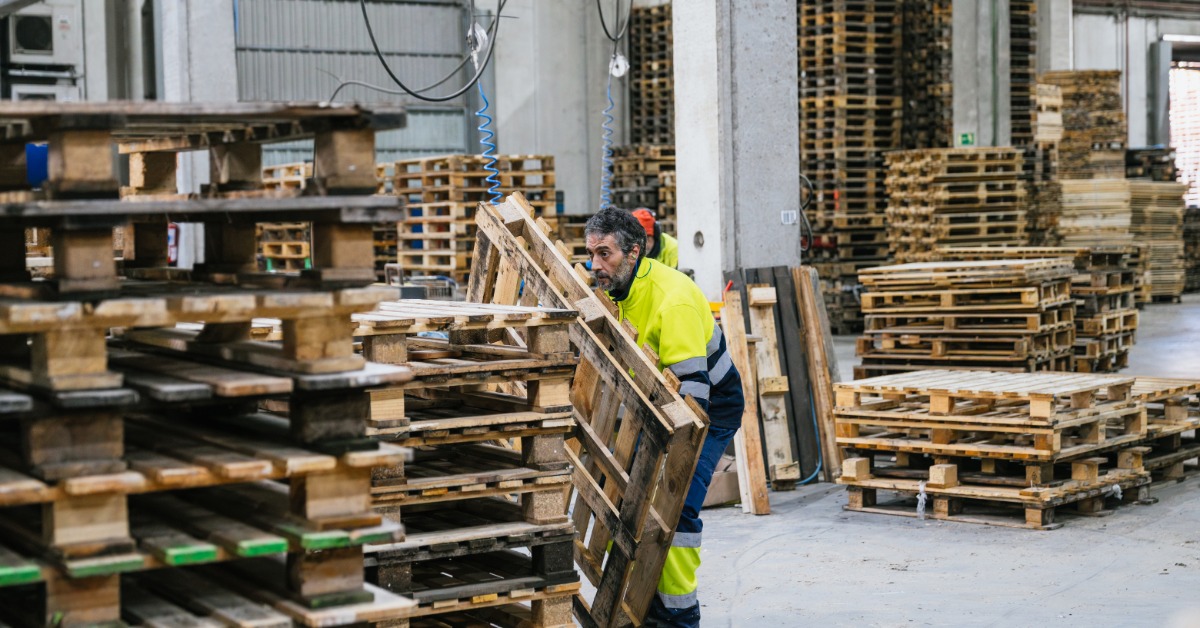
Keeping that inventory accessible matters because pallet demand does not disappear when a shipment reaches its destination. Businesses continue to need pallets for future loads, so recovering existing units gives the supply network another source of usable inventory before turning to additional raw lumber.
Pallet Repair Preserves Usable Components
Even when damage prevents a pallet from continuing in its current condition, the remaining structure may still contain significant usable material. A damaged deck board, or another compromised component, does not justify replacing the entire pallet when other parts remain suitable for continued service.
By addressing the specific components that prevent continued use, repair can return suitable pallets to service while preserving more of the wood already invested in them. Extending the usefulness of that existing material reduces the need to manufacture a completely new unit whenever limited damage occurs.
Once a pallet can no longer function as a complete unit, its remaining usable wood may still provide material for repair applications. Businesses can incorporate recycled pallets for sale into a broader pallet program that draws more value from existing lumber while maintaining access to serviceable inventory.
Recycled Pallets Create Another Source of Supply
Businesses that rely entirely on newly manufactured pallets tie their pallet requirements more closely to the availability of fresh lumber. Incorporating recycled inventory gives purchasing teams another potential source for suitable pallets.
That distinction becomes important when businesses need substantial or recurring pallet volumes. Recycled supply draws from material already circulating within the pallet network, so companies can satisfy applications without requiring new lumber for every pallet they purchase.
A mixed sourcing approach can also give buyers more flexibility when different applications have different requirements. Operations can reserve new pallets for uses that call for specific construction while directing recycled inventory toward applications where it meets the performance expectations.
Pallet Specifications Influence Recycled Material Use

Recycled inventory still needs to match the load and handling environment. Choosing recycled pallets solely because they reduce demand for new material would overlook the operational purpose a pallet must serve.
Common pallet sizes and configurations may offer greater opportunities for recovery because more compatible inventory can circulate through established pallet streams. Specialized requirements can narrow the available recycled supply if recovered pallets do not match the dimensions or construction an application needs.
Purchasing teams therefore need to consider material efficiency alongside practical performance. Selecting a recycled option that cannot reliably support the intended application creates little value if damage or premature replacement follows. The strongest sourcing decisions use recovered material where it fits operational requirements and preserves new production for applications that genuinely require it.
Recycled Pallets Support More Efficient Material Use
Reducing raw lumber dependence is not simply a matter of buying fewer new pallets. The larger opportunity comes from getting more productive use from wood that businesses have already harvested, processed, and incorporated into pallet inventory.
Recovery and repair assist in preserving that material value by keeping usable pallets circulating longer. When businesses consistently return suitable inventory to the pallet network, existing lumber can support additional shipments before replacement becomes necessary.
New and Recycled Pallets Can Serve Different Needs
Recycled pallets do not eliminate the need for newly manufactured inventory. Certain loads may require specific dimensions or construction characteristics that available recycled pallets cannot consistently provide.
New pallets can serve those applications while recycled inventory handles uses where recovered pallets meet performance requirements. The result is a more deliberate sourcing strategy. Businesses can evaluate where new construction provides necessary value and where recovered inventory offers an appropriate alternative, allowing both pallet types to contribute to reliable operations.
Build a Pallet Strategy Around Material Value
Pallet purchasing decisions influence more than the immediate availability of shipping platforms. They also determine whether existing wooden pallets continue generating value or whether an operation repeatedly depends on newly manufactured inventory to meet demand.
For companies evaluating how recycled pallets reduce dependence on raw lumber, the answer lies in keeping suitable pallets and components productive for as long as their condition allows. Recovery creates access to existing inventory, while repairs preserve usable material that might otherwise leave circulation.
First Alliance Logistics Management helps businesses evaluate pallet options based on their operational and sourcing requirements. Companies looking to incorporate recovered inventory into their pallet strategy can work with FALM to source recycled pallets for sale that make effective use of existing wood while supporting dependable pallet supply.