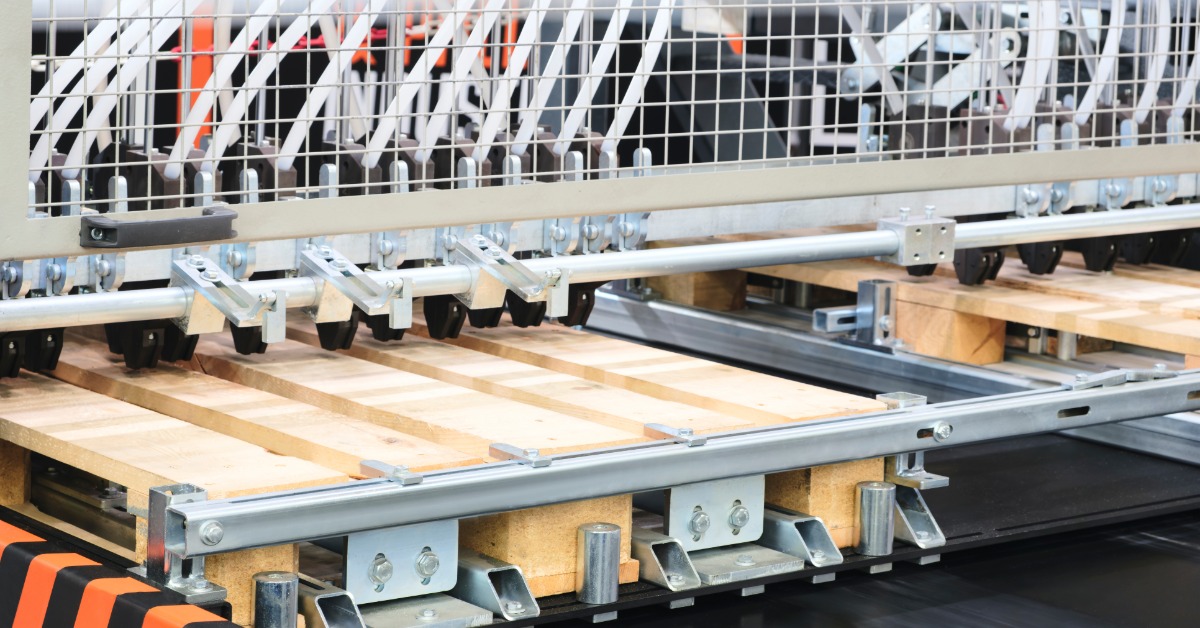
Warehouse automation leaves less room for pallet inconsistencies than conventional material handling. Automated equipment follows programmed movements within defined tolerances, so dimensional variations or damaged components can interfere with transfers that a forklift operator might otherwise adjust for manually. Pallet specifications therefore need to account for the equipment that will interact with each load.
Effective pallet design for automated warehouses connects the pallet to the handling system surrounding it. Businesses should evaluate how pallet construction affects equipment compatibility and consistent movement before introducing new inventory into an automated operation.
Dimensional Consistency Keeps Pallets Moving
Automated systems expect pallets to arrive within predictable dimensional parameters. Differences in height or footprint can affect positioning when conveyors or other equipment transfer loads through the facility.
Consistent dimensions give automated equipment a more predictable platform to handle. Businesses should account for equipment tolerances when establishing pallet specifications, particularly where the system transfers pallets between different stages of the operation.
Match Pallet Construction to Handling Equipment
Automated guided vehicles and other handling systems engage pallets according to their equipment design. Entry dimensions or component placement that interfere with those movements can interrupt handling even when the pallet remains structurally capable of supporting its load.
Designing custom wood pallets around the equipment allows businesses to consider where handling mechanisms engage the pallet before finalizing construction. Matching the design to those physical interactions reduces compatibility issues that might otherwise surface after implementation.
Account for the Load, Not Just the Pallet
A custom wood pallet can meet dimensional requirements and still behave differently once workers place a load on it. Weight distribution affects how pallet components respond under pressure, and excessive deflection can alter how the completed unit interacts with automated equipment.
Evaluating the pallet and its intended load together gives designers a clearer picture of where structural support matters. Materials can then support the areas that experience meaningful stress without adding unnecessary construction that provides little benefit to the application.
Consider Pallet Condition During Repeated Use
Automated compatibility does not end when a pallet enters service for the first time. Repeated handling can affect components, making ongoing pallet condition relevant when an operation expects multiple uses.
Facilities should establish standards for determining when a pallet remains suitable for their automated system. Catching damage before the pallet reaches sensitive equipment can help operations maintain the dimensional consistency established during the initial design process.
Build the Pallet Around the Automated System
Automation works best when the materials moving through a facility meet the physical requirements its equipment expects. Designing wooden pallets for automated warehouses means considering those interactions during pallet specification, so the finished design supports dependable movement through the intended system.
First Alliance Logistics Management helps businesses evaluate pallet requirements around their applications and handling environments. Companies planning an automated operation can contact FALM to source custom wood pallets designed around their equipment requirements and operational needs.