

The direction from which a forklift can approach a pallet depends on the openings built into its structure. In warehouses where workers regularly move products between areas, those access points determine how operators position their equipment to lift a load. Four-way entry shipping pallets allow forklift passage on all sides, giving operators more options when approaching palletized products.
Understanding a four-way entry shipping pallet helps businesses evaluate how different construction methods affect equipment compatibility. By examining entry clearance and structural design, purchasing teams can identify pallets that meet their operational requirements.
What Makes a Pallet Four-Way Entry?
A four-way entry pallet has openings that accommodate forklift tines from either end or either side. Unlike designs with access through only two opposing ends, these pallets offer additional entry points without requiring operators to approach from one particular direction.
The arrangement of supporting components determines where those openings appear. Some pallets use individual blocks between the deck boards, while others incorporate openings into continuous wooden supports. Both configurations can provide four-way forklift access, but their structural differences affect equipment clearance.
How Are Four-Way Entry Pallets Constructed?
Manufacturers can achieve four-way entry through different structural designs. Block pallets and notched stringer pallets are two common examples, each using a different arrangement of supporting components to create forklift openings.
Block Pallet
Block pallets use separate wooden blocks to connect and support the upper and lower deck components. Manufacturers position these blocks to create openings along the pallet’s sides and ends, allowing forklift tines to approach from multiple directions.
The spacing between blocks influences entry clearance, while the deck arrangement contributes to structural performance. Depending on the design, bottom deck boards may also affect how pallet jacks enter or move beneath the pallet.
Notched Stringer
Stringer pallets rely on continuous wooden members that run beneath the deck boards. In a traditional two-way design, these supports allow forklift entry through the ends but obstruct entry from the sides.
Manufacturers create four-way access by cutting notches into the stringers. These openings allow forklift tines to enter from the sides while the remaining stringer material supports the deck.
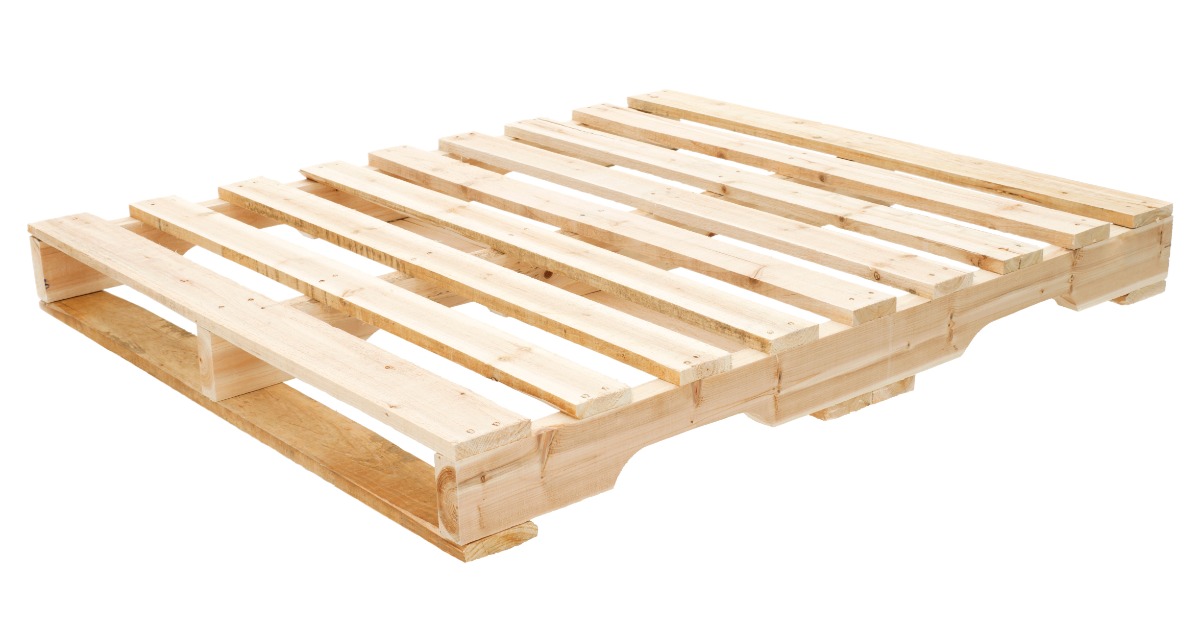
Notched stringers generally provide more restricted side-entry clearance than many block pallet designs. Buyers should confirm the opening dimensions before selecting a configuration.
Does Four-Way Entry Mean All Equipment Can Use the Pallet?
Although four-way entry describes passage from all sides, it does not guarantee that every forklift or pallet jack can use each opening. Equipment dimensions and pallet construction determine whether an operator can safely engage the load. Forklifts can approach from any accessible side, provided the openings accommodate their tines.
Pallet jacks have additional clearance requirements because their load wheels must pass through or beneath portions of the pallet structure. Some four-way designs accommodate forklift tines from all sides but restrict pallet jack entry from certain directions.
For facilities using both types of equipment, purchasing teams should confirm entry clearance with their supplier. Checking these details before ordering new wood pallets can prevent compatibility problems after delivery.
How Does Four-Way Entry Affect Pallet Orientation?
Pallet orientation becomes important when workers position loads near walls or adjacent inventory. A four-way entry design provides additional options for accessing a load when its original approach direction becomes unavailable.
For example, a pallet may arrive at a receiving dock with its end openings facing the aisle. After employees move it into a staging area, its side may become the most accessible surface. Four-way entry pallets offer a space for the forklift to engage the pallet from that direction when sufficient operating clearance remains available.
This flexibility does not change the space a forklift needs to maneuver safely. Equipment dimensions and aisle clearance still determine whether an operator can approach a load from a particular direction.
What Load and Storage Requirements Apply to Four-Way Pallets?
Four-way entry describes how equipment accesses a pallet, not how much weight the pallet can support. Load capacity depends on construction details and the conditions under which the pallet carries its load.
Load Distribution and Structural Support
Product weight affects the forces acting on deck boards and supporting components. An evenly distributed load may place different demands on the structure than products concentrated in a smaller area.
Buyers should communicate expected load weight and distribution so suppliers can evaluate whether the construction provides adequate support. Entry openings alone cannot establish a pallet’s load capacity.
Compatibility With Warehouse Storage

A pallet resting directly on the floor receives support differently from one positioned across warehouse rack beams. When racking supports only portions of the pallet, its structural components must carry the load across unsupported spaces.
Four-way entry does not automatically establish suitability for rack storage. Businesses should identify their storage conditions and confirm that the selected construction meets those requirements.
What Specifications Should Buyers Confirm Before Ordering?
Once a business identifies four-way entry as an appropriate configuration, the next step is to establish construction requirements. Clear specifications help suppliers determine whether an available design meets those needs.
A purchasing specification may include:
- Overall dimensions: Required pallet length, width, and height.
- Construction type: Block or notched stringer design.
- Entry clearance: Opening dimensions for handling equipment.
- Load requirements: Expected weight and distribution conditions.
- Storage compatibility: Floor stacking or applicable racking requirements.
Specifications should reflect the equipment and operating conditions at the receiving facilities. If locations use different forklifts or storage systems, purchasing teams should confirm whether one design can accommodate those differences.
When Should Businesses Consider Four-Way Entry Pallets?
Four-way entry pallets are particularly useful when operations require forklift passage from different directions. Facilities that regularly reposition loads or work with changing pallet orientations may benefit from the additional access points.
However, access requirements should guide the decision. A facility where forklifts consistently approach pallets from the same direction may not need a four-way configuration for every application.
When evaluating new wood pallets, businesses should select a design that provides the necessary forklift access while meeting their load and storage requirements.
Find Four-Way Entry Shipping Pallets With FALM
Choosing a four-way entry shipping pallet requires more than confirming forklift passage from all sides. Businesses must also consider equipment clearance and structural support to ensure the pallet performs as intended under their specific handling and storage conditions.
First Alliance Logistics Management supplies new wood pallets through its national supplier network, helping businesses source pallets that meet their specifications. Contact FALM to discuss four-way entry pallet options and determine which construction best suits your operational requirements.