
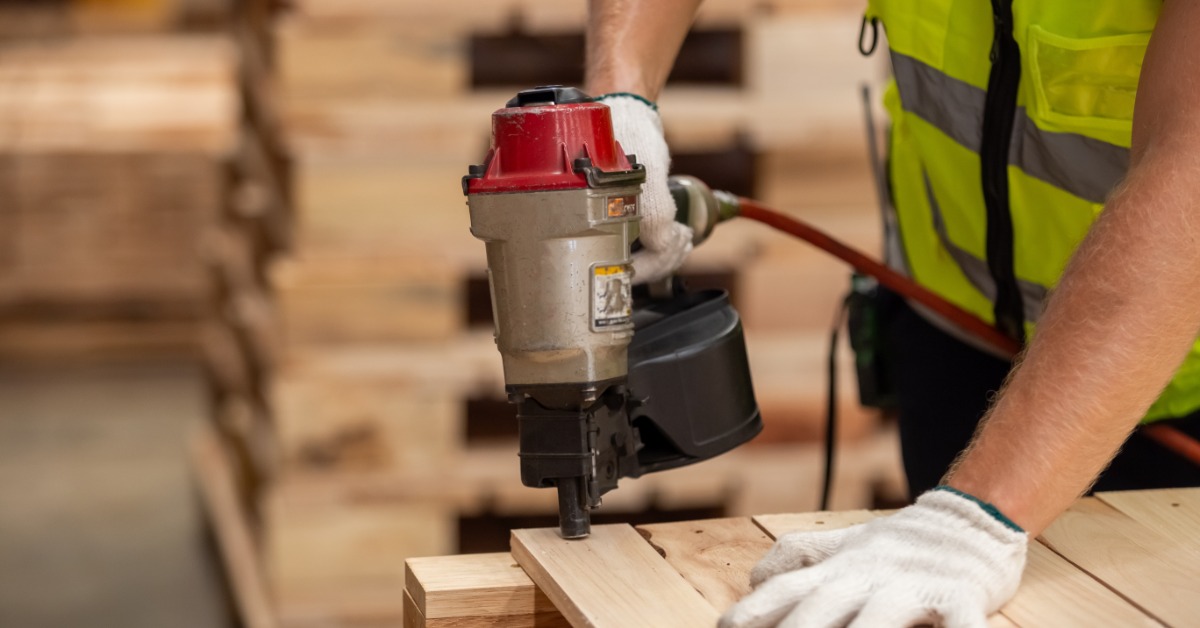
Pallet construction directly influences how effectively businesses store and transport products. While pallet dimensions and wood quality often receive the most attention, nail placement also affects structural strength and durability. The number of nails, their positioning, and their ability to secure individual components all influence pallet performance under different loading conditions.
Understanding how pallet nail patterns affect load performance allows businesses to make more informed decisions about pallet specifications. Proper fastening supports consistent weight distribution and reduces the likelihood of structural damage during routine material handling.
Nail Placement Influences Weight Distribution
The positioning of nails determines how effectively pallet components transfer weight throughout the structure. Strategic nail placement strengthens connections between deck boards and stringers or blocks, allowing the pallet to maintain stability under heavy loads.
Uneven fastening patterns can concentrate stress around individual connection points, increasing the risk of loose boards or joint failure. A qualified pallet supplier can evaluate nail placement requirements based on the pallet’s intended load capacity and handling conditions.
Nail Quantity Affects Structural Strength
The number of nails securing each connection influences how well a pallet withstands pressure during storage and transportation. Too few fasteners may allow deck boards to separate from supporting components, particularly when workers repeatedly lift or reposition loaded pallets.
However, adding more nails does not automatically improve performance. Excessive fastening can split wooden components or weaken connections when nails sit too close together. Businesses should work with a pallet supplier to establish fastening specifications that balance connection strength with material integrity.
Nail Patterns Improve Resistance to Handling Stress
Forklifts and pallet jacks expose pallets to repeated movement and mechanical stress. During lifting, sudden impacts and shifting loads place additional pressure on the connections between wooden components.
Properly designed nail patterns distribute these forces across multiple fastening points, reducing the likelihood of premature joint separation. Nail spacing and orientation also influence how effectively connections resist movement during handling. Businesses that frequently move heavy products should consider these factors when evaluating pallet construction.
Fastener Selection Supports Long-Term Pallet Performance
Beyond placement, the type of nail influences how securely pallet components remain connected. Nail length, diameter, and shank design affect withdrawal resistance and the strength of individual joints.
For example, ring-shank nails generally provide greater resistance to withdrawal than smooth-shank alternatives under comparable conditions. However, fastener selection should account for wood characteristics and the pallet’s intended application. An experienced pallet supplier can recommend suitable fastening specifications based on operational requirements.
Strengthen Pallet Performance
Understanding how pallet nail patterns affect load performance allows businesses to evaluate pallet construction beyond basic dimensions and weight ratings. Appropriate fastening specifications contribute to stronger connections and more reliable performance throughout the supply chain.
At First Alliance Logistics Management, we work with businesses to identify pallet solutions that align with their handling requirements and operational demands. Contact us today to discuss your pallet specifications and explore solutions that support your supply chain.