Warehouse performance depends heavily on pallet handling at every stage of the supply chain. Particularly, since damage, injuries, and product loss typically trace back to inconsistent training or unclear procedures. Companies that invest time in structured instruction can reduce disruptions, extend pallet life, and improve freight stability across facilities. A clear understanding of how to train employees on proper pallet handling techniques builds a safer operation while protecting long-term margins.
Why Pallet Handling Training Impacts Operational Performance
Pallets move through receiving docks, storage racks, production lines, and outbound freight zones, which means they experience repeated handling within a single shift. Small missteps, such as dragging pallets across concrete or stacking uneven loads, compounds, and weaken structural integrity.
When training connects daily behavior to measurable results, like freight claim reduction and lower pallet replacement costs, employees approach pallet handling with greater awareness. Operational consistency improves when teams understand the financial and safety implications behind each movement.
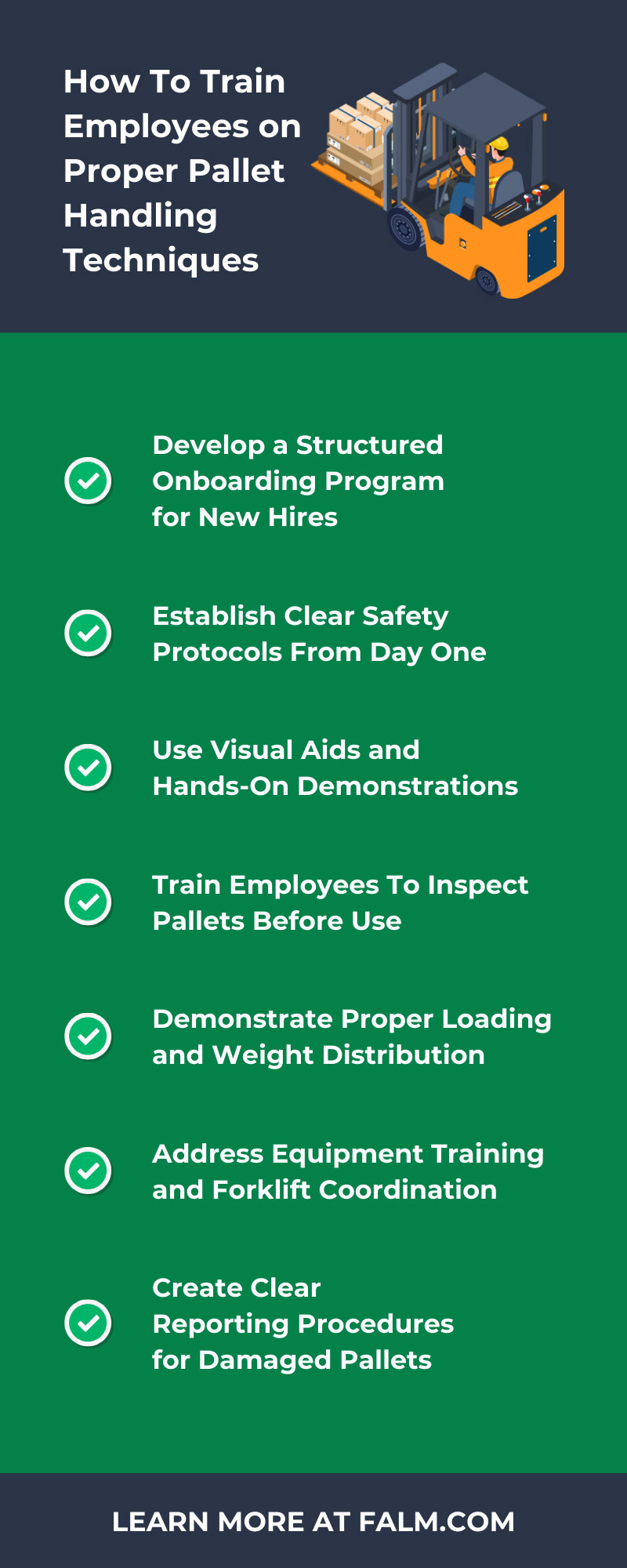
Develop a Structured Onboarding Program for New Hires
New employees establish habits quickly, which makes early instruction especially influential. A structured onboarding plan should outline what team members must understand about inspection standards, load building practices, and equipment coordination before working independently.
Start by pairing new hires with experienced mentors to reinforce expectations in real time while supervisors verify competency through skill checklists. Use standardizing onboarding across shifts and locations to prevent procedural drift and keep handling expectations aligned throughout the company.
Establish Clear Safety Protocols From Day One
Effective training begins with written safety standards for the facility’s specific layout, traffic flow, and equipment use. Supervisors should explain how lifting limits, stacking thresholds, and aisle spacing requirements apply during real warehouse scenarios rather than abstract presentations.
To do this, orientation sessions should demonstrate:
- Proper manual lifting posture and team lifting coordination
- Safe pallet jack and forklift positioning
- Approved stacking heights based on load weight
- Even weight distribution across deck boards
- Required protective equipment in handling zones
Practicing these techniques under supervision reinforces correct movement patterns before shortcuts develop.
Use Visual Aids and Hands-On Demonstrations
Many employees retain information more effectively when instruction includes visual reference points. Posting diagrams that show stable versus unstable loads, or approved versus damaged pallets, reinforces classroom guidance throughout the workday.
Live demonstrations allow trainers to physically build sample loads and show how improper alignment creates imbalance. Employees who participate in these exercises gain a clearer understanding of how load shifts occur during transit and how to prevent them.
Train Employees To Inspect Pallets Before Use
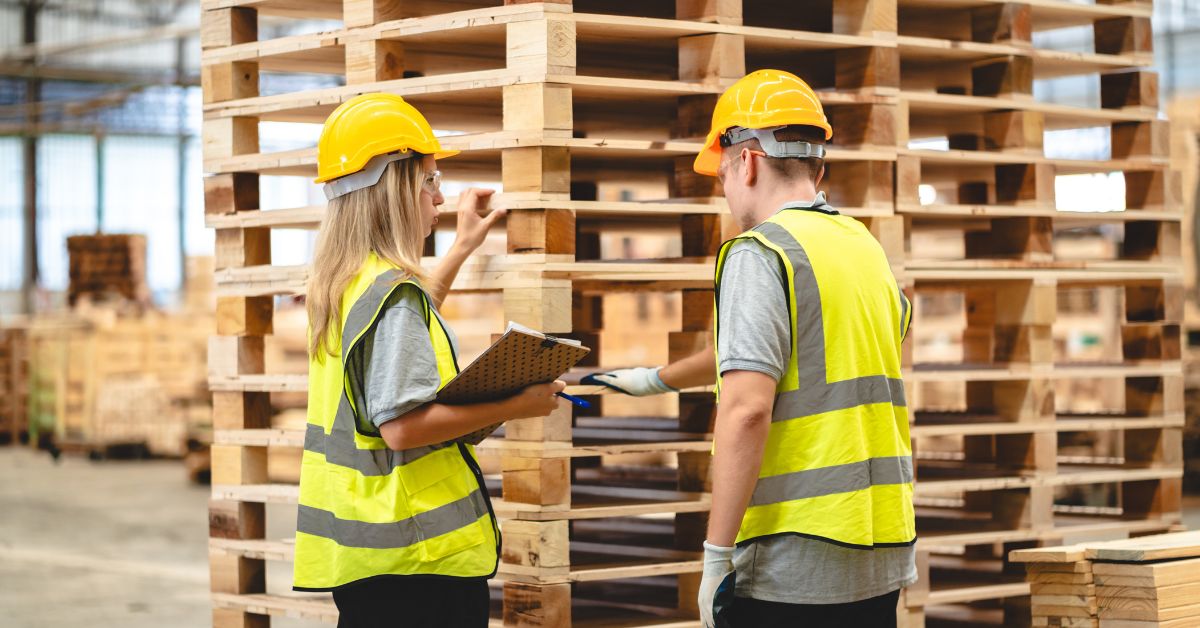
Inspection training for pallets reduces avoidable injuries and shipment disruptions. Employees need consistent criteria for identifying cracked deck boards, protruding nails, split stringers, and signs of moisture damage.
Supervisors should present real pallet examples and explain how each defect compromises stability under weight-bearing circumstances. Facilities that rely on recycled wood pallets must emphasize inspection standards, so structurally weakened units do not return to circulation.
Demonstrate Proper Loading and Weight Distribution
Improper loading remains one of the most common causes of pallet failure during transport. Uneven weight placement increases shifting when forklifts turn sharply, or trailers come to a stop suddenly.
Training should reinforce that heavier items are evenly distributed across deck boards without overhang. Also, post clear instructions on stretch wrapping, corner boards, and banding methods to reduce movement and protect product integrity.
Address Equipment Training and Forklift Coordination
Forklift operation directly affects pallet lifespan and overall warehouse safety. Incorrect fork entry can split boards or damage stringers, even if surface damage appears minimal.
Operators should practice full fork insertion, level lifting, and controlled turns in tight aisles. Make sure to also teach them coordinated traffic patterns and communication between drivers and floor staff to reduce rushed maneuvers that place unnecessary strain on pallets.
Create Clear Reporting Procedures for Damaged Pallets
Inspection alone does not solve the problem if employees lack direction in the next steps. Without defined reporting procedures, damaged pallets may reenter active use and create repeated risk.
Facilities should designate staging areas for compromised pallets and clearly assign responsibility for evaluation, repair, or removal. This structured documentation supports inventory accuracy and strengthens accountability across departments.
Incorporate Refresher Courses and Ongoing Coaching
Initial onboarding establishes expectations, yet reinforcement maintains consistency over time. Use refresher sessions to revisit standards while addressing operational changes or recurring damage trends.
At this time, also review pallet breakage patterns for real-world examples. Continuous coaching prevents minor shortcuts from becoming normalized behavior on the warehouse floor.
Align Training With Sustainability and Waste Reduction Goals
Pallet handling influences disposal rates, recycling recovery, and overall material spend. Mishandling shortens service life and increases unnecessary waste within the supply chain.
When employees understand how pallets support cost control and sustainability initiatives, they approach handling with greater attention to detail. Proper stacking and inspection extend the usable life of pallets while improving recovery value at the end of service.
Train Teams on Proper Pallet Sorting
Sorting procedures should clearly distinguish between reusable, repairable, and scrap pallets. Employees who understand these categories make faster and more accurate decisions under operational pressure.
Clear labeling systems and designated staging areas reduce confusion while protecting viable recycled wood pallets from accidental disposal. Plus, structured sorting supports recycling rebates and waste stream management programs.
Measure the Return on Training Investment
Training programs gain the most credibility when leadership measures tangible outcomes. Tracking pallet breakage rates, repair costs, freight claims, and injury reports provides a clear view of performance improvements.
Comparing data before and after program implementation helps quantify cost savings and operational stability. Clear reporting allows leadership to justify continued investment in training and pallet program improvements.
Encourage Accountability Across Departments
Pallet handling outcomes reflect decisions made beyond the warehouse floor. Purchasing defines pallet specifications, operations set workflow standards, and logistics determines load configuration requirements.
So, when departments align on consistent expectations, employees receive clearer guidance and fewer conflicting instructions. Cross-functional collaboration reduces avoidable strain on materials and improves handling discipline across locations.
Standardize Pallet Specifications Across Your Operation
Training programs perform more effectively when employees work with consistent pallet types. Variations in size, deck board thickness, or construction quality create uncertainty during inspection and load building.
Establishing standardized specifications, dimensions, load capacity, grade expectations, and acceptable damage thresholds creates predictable performance benchmarks. When sourcing recycled wood pallets, defined grading criteria can help employees make confident inspection and sorting decisions.
Build Stronger Operations With Smarter Pallet Management
Organizations evaluating how to train employees on proper pallet handling techniques should also assess pallet sourcing and lifecycle oversight. Training delivers stronger results when paired with consistent material quality and structured recycling support.
First Alliance Logistics Management supports national pallet sourcing, reverse logistics, and recycling programs designed to simplify oversight and reduce waste. Contact FALM to discuss how a coordinated pallet strategy can reinforce employee training and strengthen your operation.